The Nazca Lines
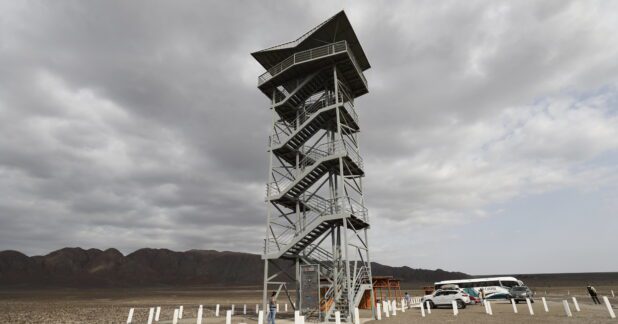
The Nazca Lines are a set of geoglyphs located in the Nazca Desert in southern Peru. They were created by the Nazca civilization between 200 BC and 600 AD and extend over a vast area of approximately 750 km². These figures, which include representations of animals, plants, and geometric shapes, were drawn by removing the surface layer of dark stones to reveal the lighter soil beneath.
Their exact purpose remains a mystery, but it is believed that they had religious or astronomical functions. Some theories suggest they may have been used for water rituals, while others propose that they served as astronomical observatories. In 1994, the Nazca Lines were declared a UNESCO World Heritage Site, and today they are an important tourist and archaeological attraction.